Aluminium for kitchens, sculleries and bathrooms; timber for studies, libraries and panelled rooms.
A venetian blind is a stack of horizontal slats hung on ladder tapes or cords, tilting on a rod or a wand. That tilt is the reason it still beats a roller on certain windows: at four in the afternoon you can angle the slats and push the sun up onto the ceiling, keeping the window open, the air moving and the view mostly intact.
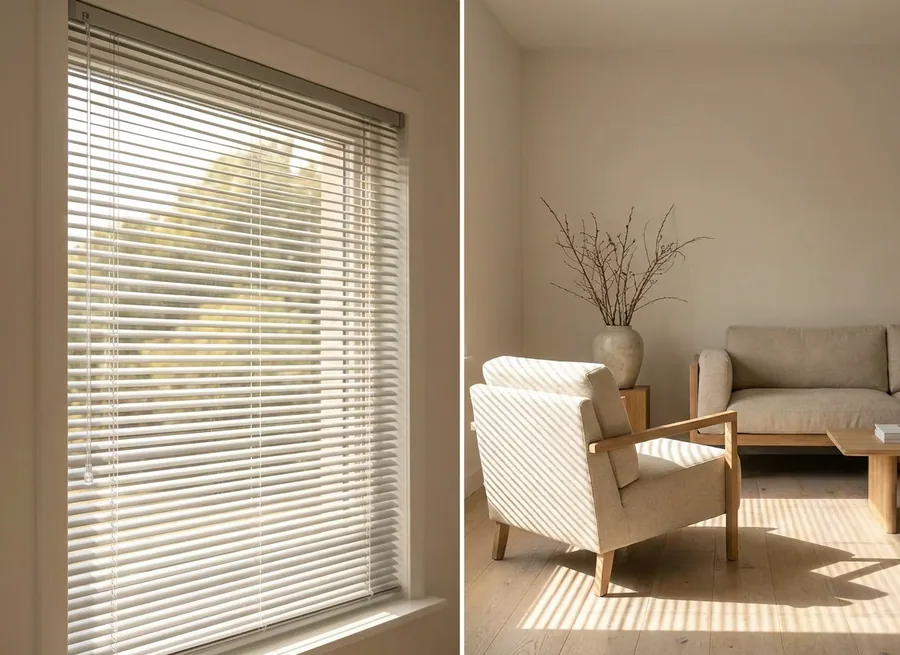
Aluminium slats — 25mm or 50mm — are the practical choice for kitchens, sculleries, bathrooms and anywhere steam and splashes live. They wipe clean, they do not warp, and the powder-coated finishes hold their colour in hard highveld light.
Timber venetians in 50mm basswood belong in studies, libraries, dining rooms and panelled spaces, where the warmth of real wood does something a painted slat cannot. They are heavier, so on a wide opening we would split the run into two blinds rather than fight a single unwieldy stack.
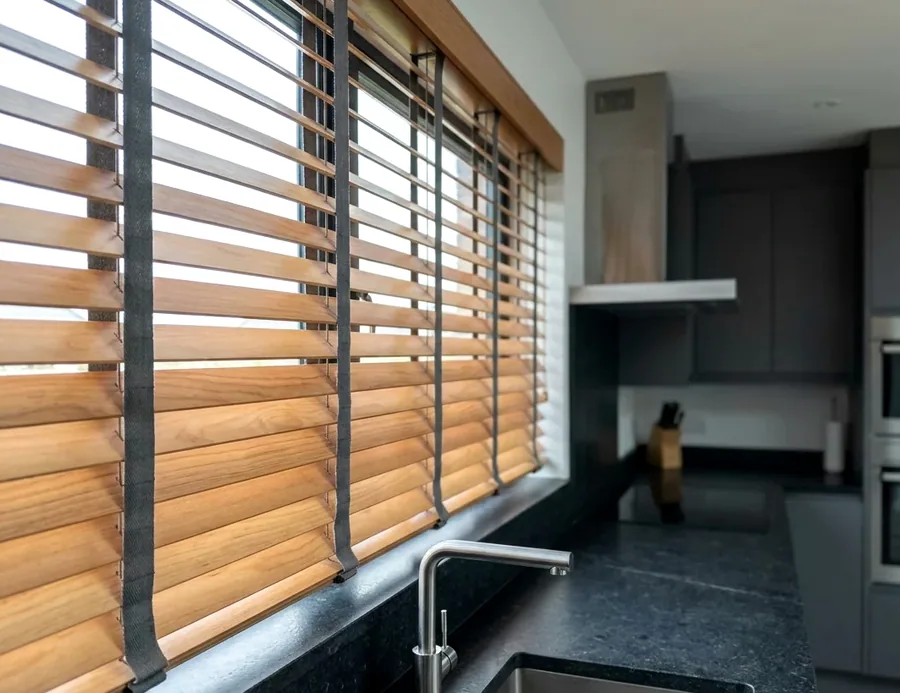
50mm timber slats on a wide run, split into two blinds so each stack stays light enough to raise comfortably.
Practical notes
- 25mm and 50mm aluminium; 50mm timber in stained and painted finishes.
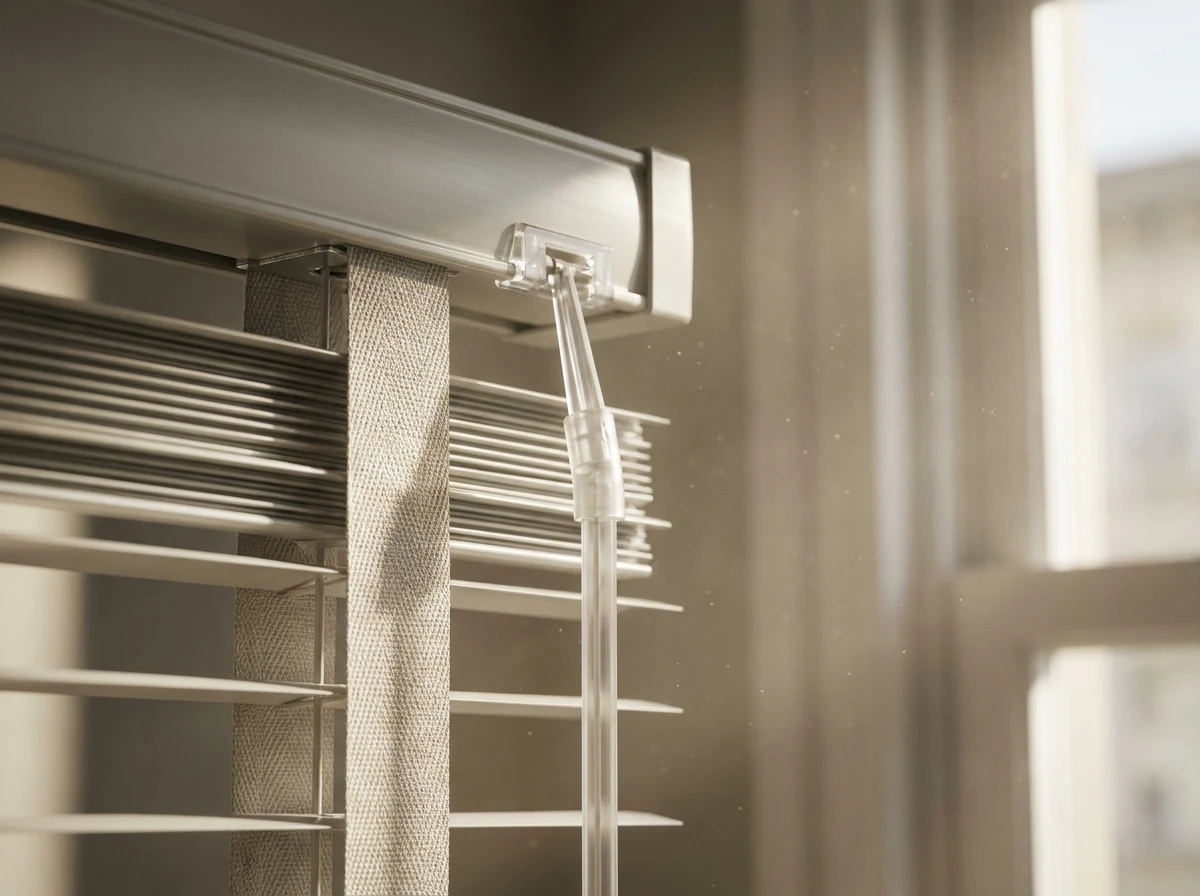
- Wand tilt as standard — no loose cords hanging in reach of children.
- Split runs on wide openings so the stack stays manageable.
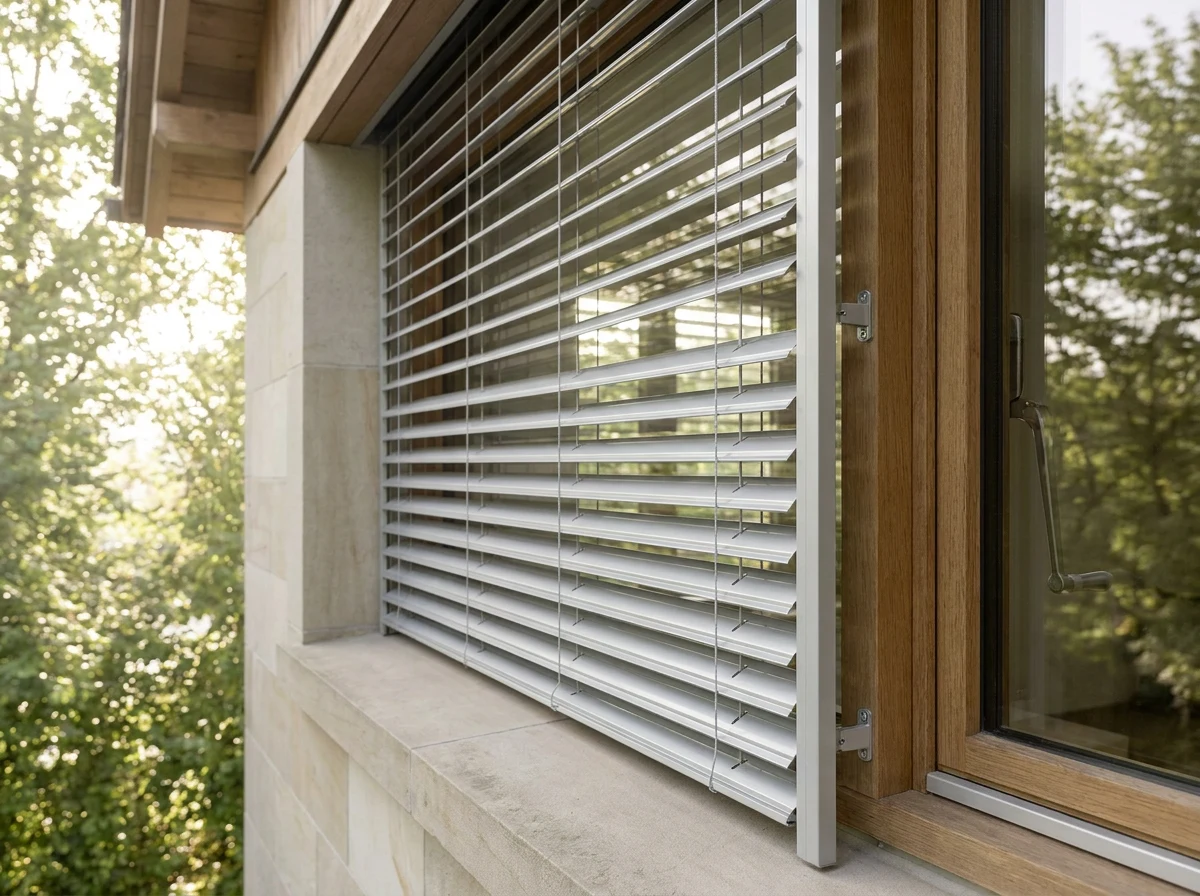
- For a hard north or west elevation, consider external venetians instead: heat stopped outside the glass beats heat managed inside it.
Often specified together