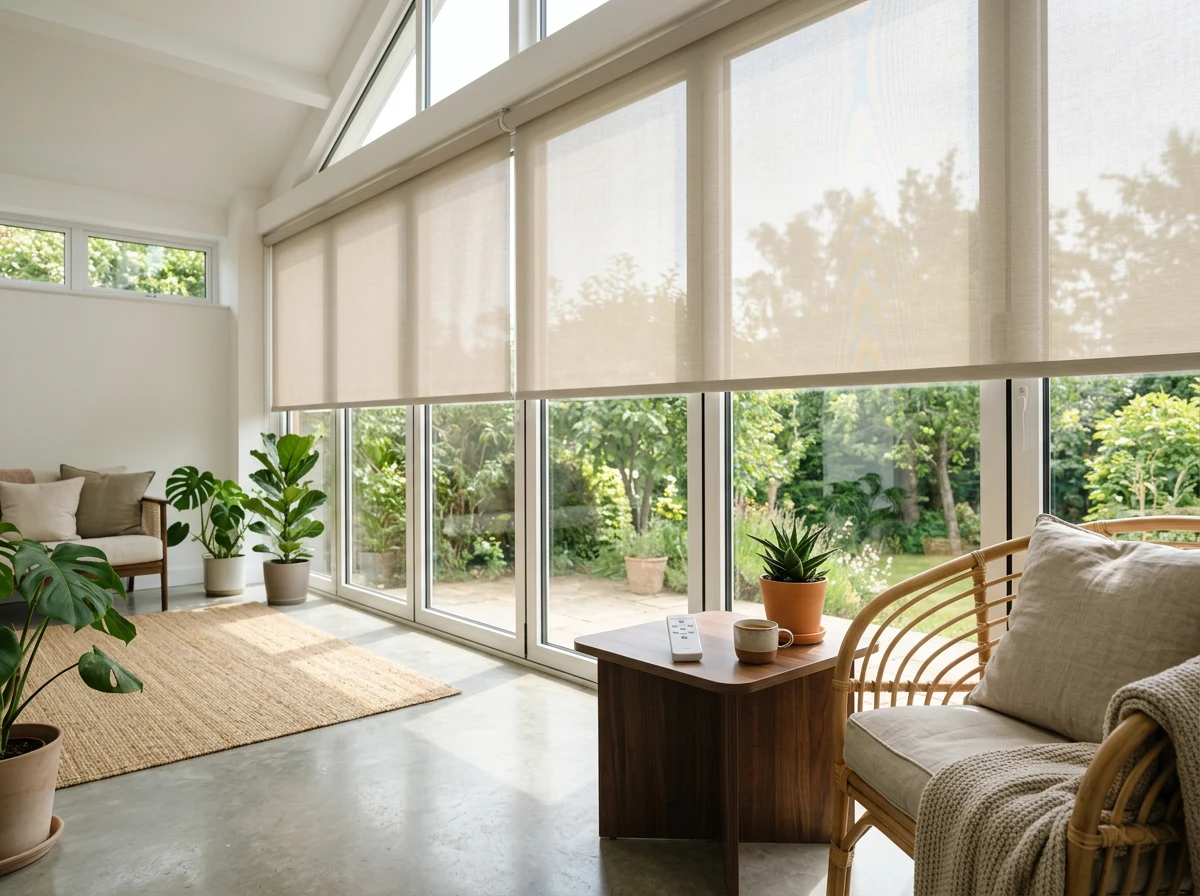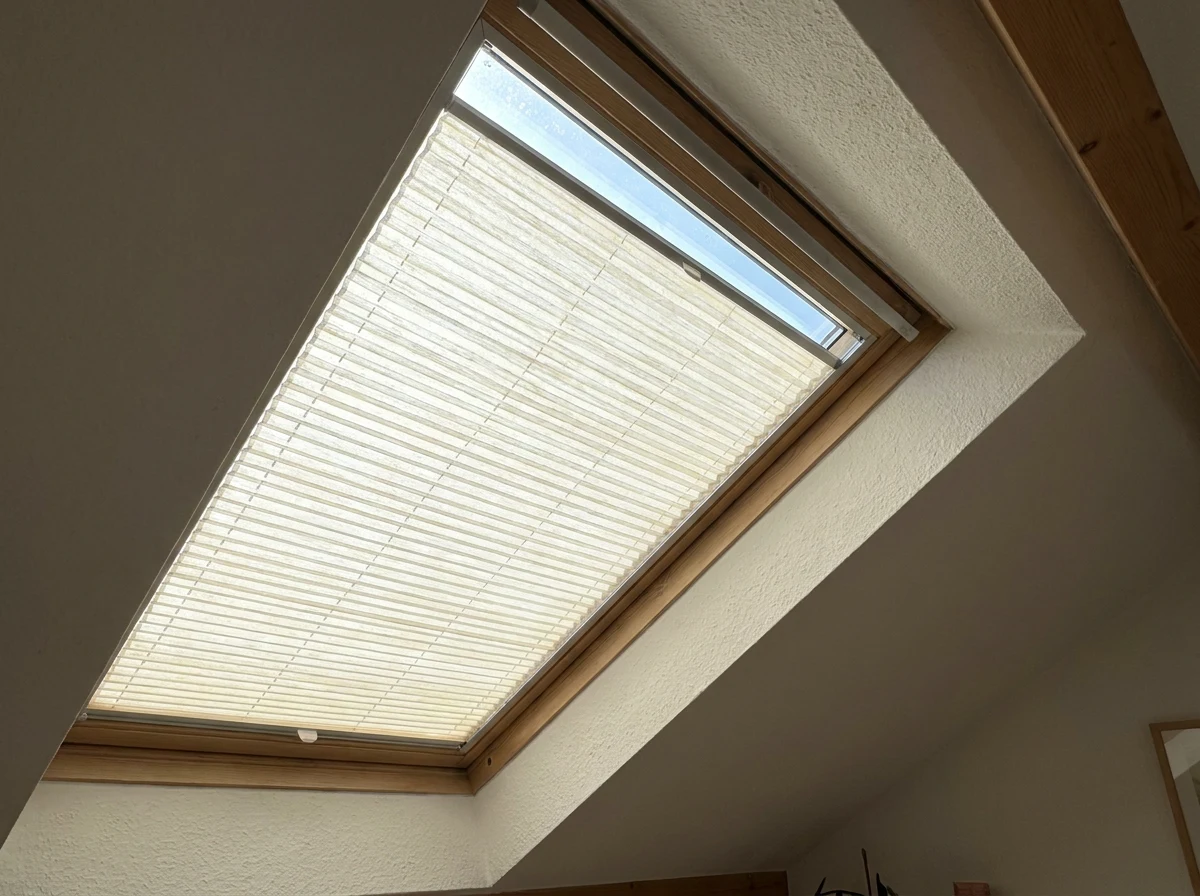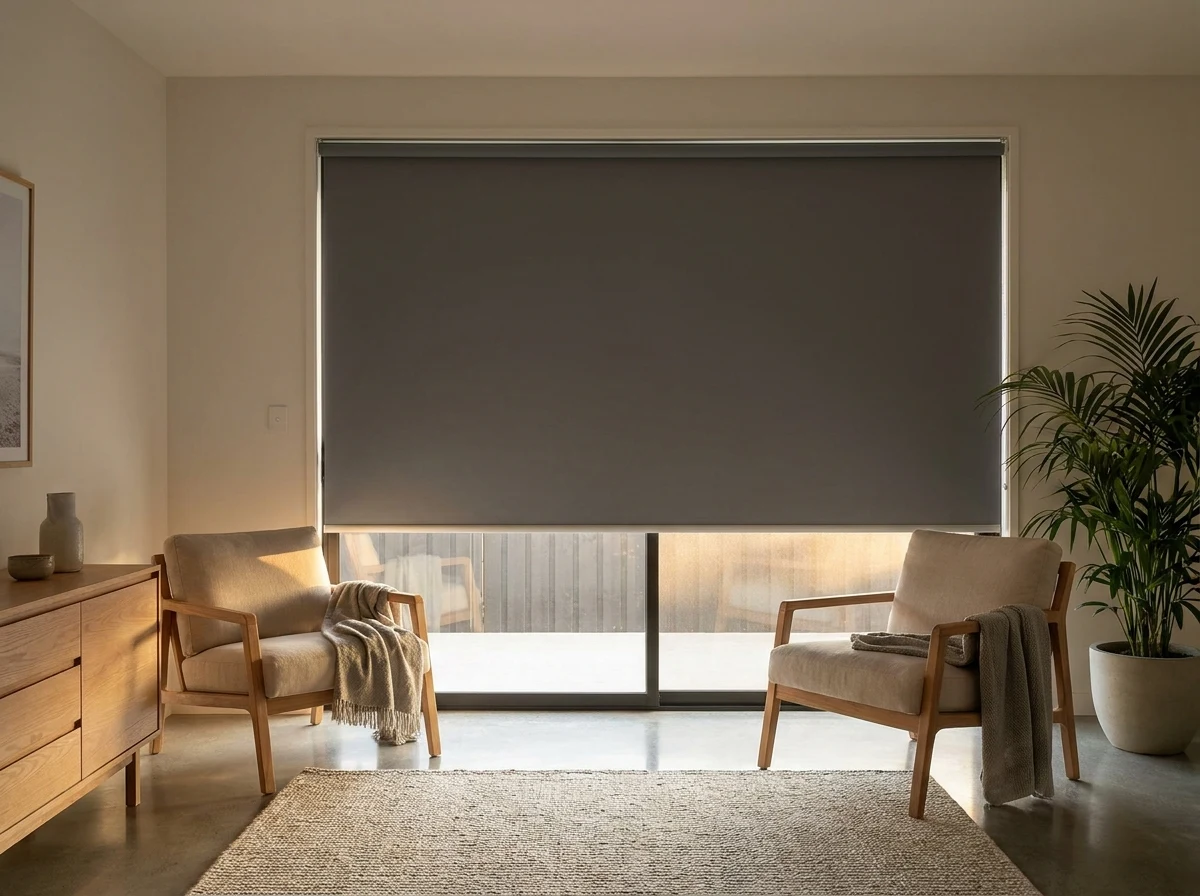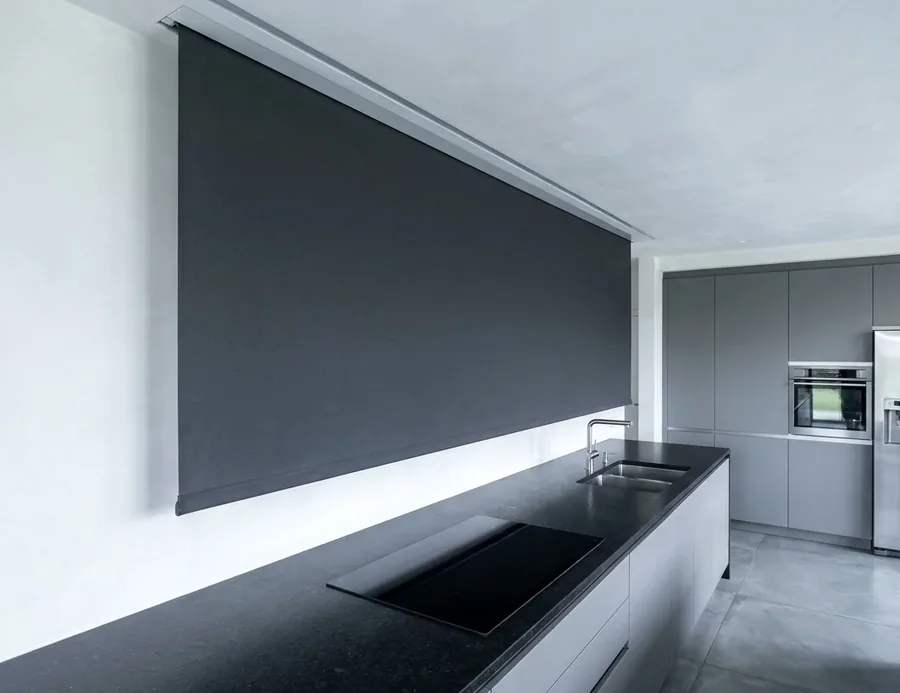
Planned at drawing stage, the blind disappears completely — you see the glass and the garden, never the mechanism.
A concealed blind box is a recess formed in the ceiling or a bulkhead, deep enough to take the roll, the brackets and the motor. When the blind is up there is nothing to see but a slot and a shadow line. It is the detail that separates a considered renovation from a nicely furnished one, and it is a large part of what we do in Sandhurst.
Because the recess is built, not fitted, this is a conversation to have early. Bring us in at drawing stage and we will give your architect or builder the internal dimensions the system needs, where the power must land for the motor, how the slot should meet the ceiling cornice, and how to keep it clear of downlights, sprinklers and aircon diffusers. Those clashes are cheap to avoid on paper and expensive to fix on site.
If the ceilings are already closed, the retrofit answer is a slim cassette pelmet — a headbox that encloses the roll on three sides and can be colour-matched to the ceiling or the joinery. It is not invisible, but it is quiet, and it reads as part of the building rather than as hardware.
Practical notes
- Recess dimensions are system-specific — exact figures come with the quote.
- Coordinate the slot with downlights, sprinklers and aircon at design stage.
- Almost always motorised; plan a power point above the ceiling line.
- Retrofit alternative: slim colour-matched cassette pelmets.
Often specified together